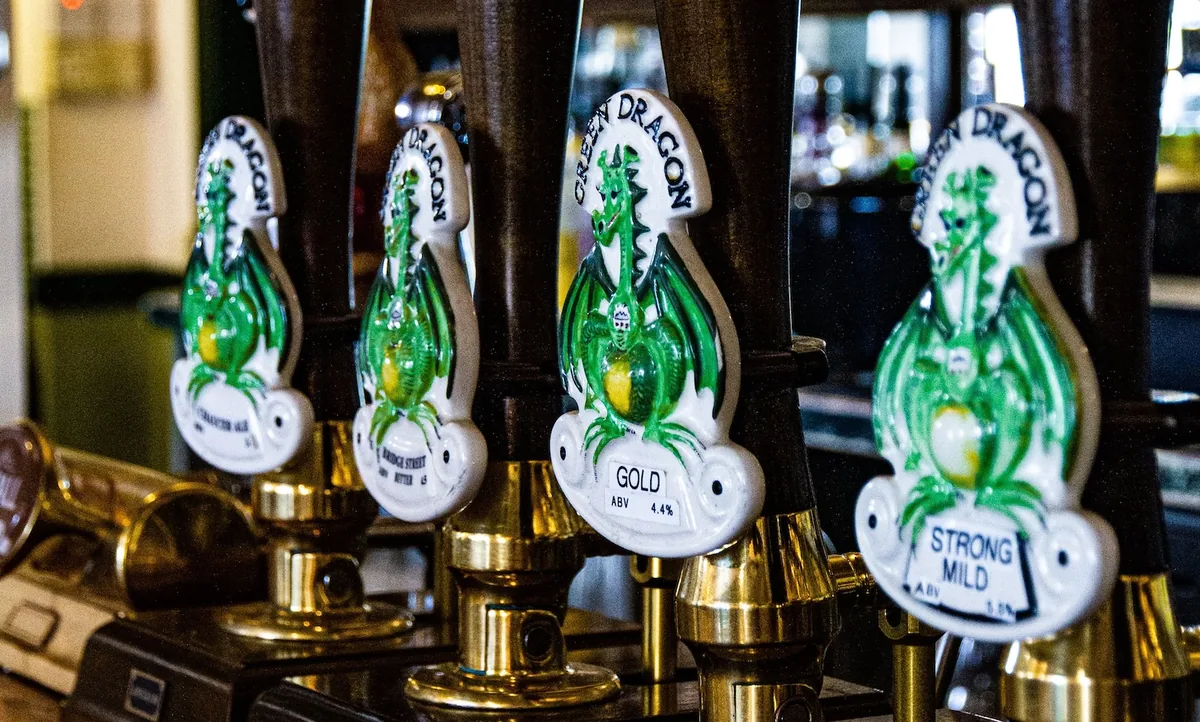
A customer comes in for 1.3 metres of quilting cotton. You unroll it, cut it and type 1.3 into the till. The price is worked out per metre, and 1.3 metres comes off the roll's stock.
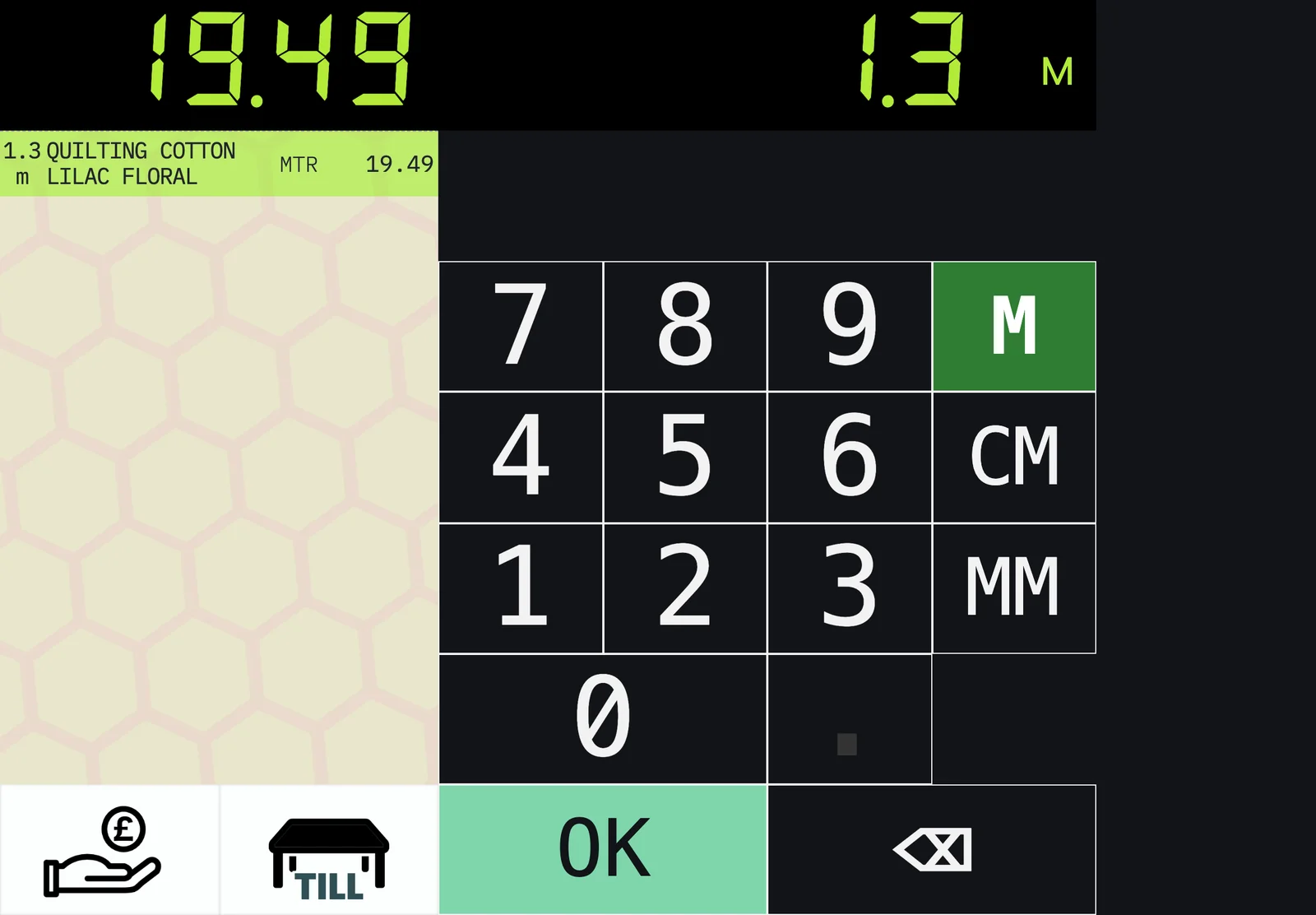
That evening another customer finds the same cotton on your web shop. They pick a quarter, a half metre or a metre, choose collection or UK post, and pay by card. Their order appears on your order board, and it comes off the same roll.
Haberdashery works the way you already count it: thread by the spool, with each colour listed on its own; buttons by the pack; patterns and zips one at a time.


The problem: Most tills and web shops count units. A fabric shop sells 1.3 metres of one thing and a quarter metre of another, and the stock has to survive both.
The problem: A web shop with its own stock count drifts from the till's, and customers order what has already been sold.
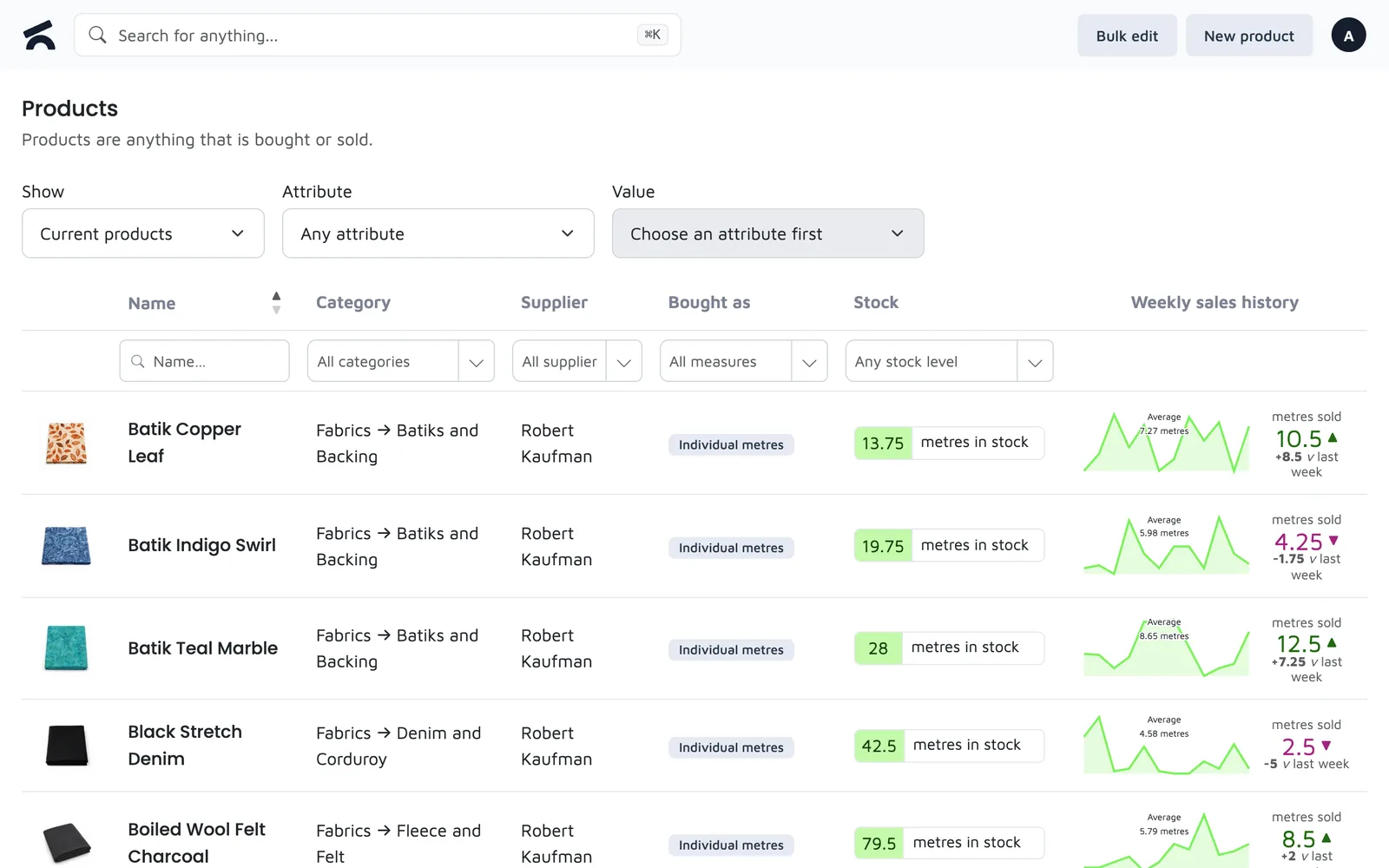
The problem: A roll arrives as 50 metres and leaves in pieces. A till that counts units cannot say how much is left or when to reorder.
Included:
For a single shop or bar
Included:
Most shops and pubs
Included:
For a busy site or a small group
Yes. The metre is a measure of the product: the price is per metre, the stock is counted in metres, and when a customer wants 1.3 metres, whoever is serving types 1.3 into the till. Cuts you sell often, a quarter metre or a half metre, are set up once and sold with a tap, in the shop and on the web shop.
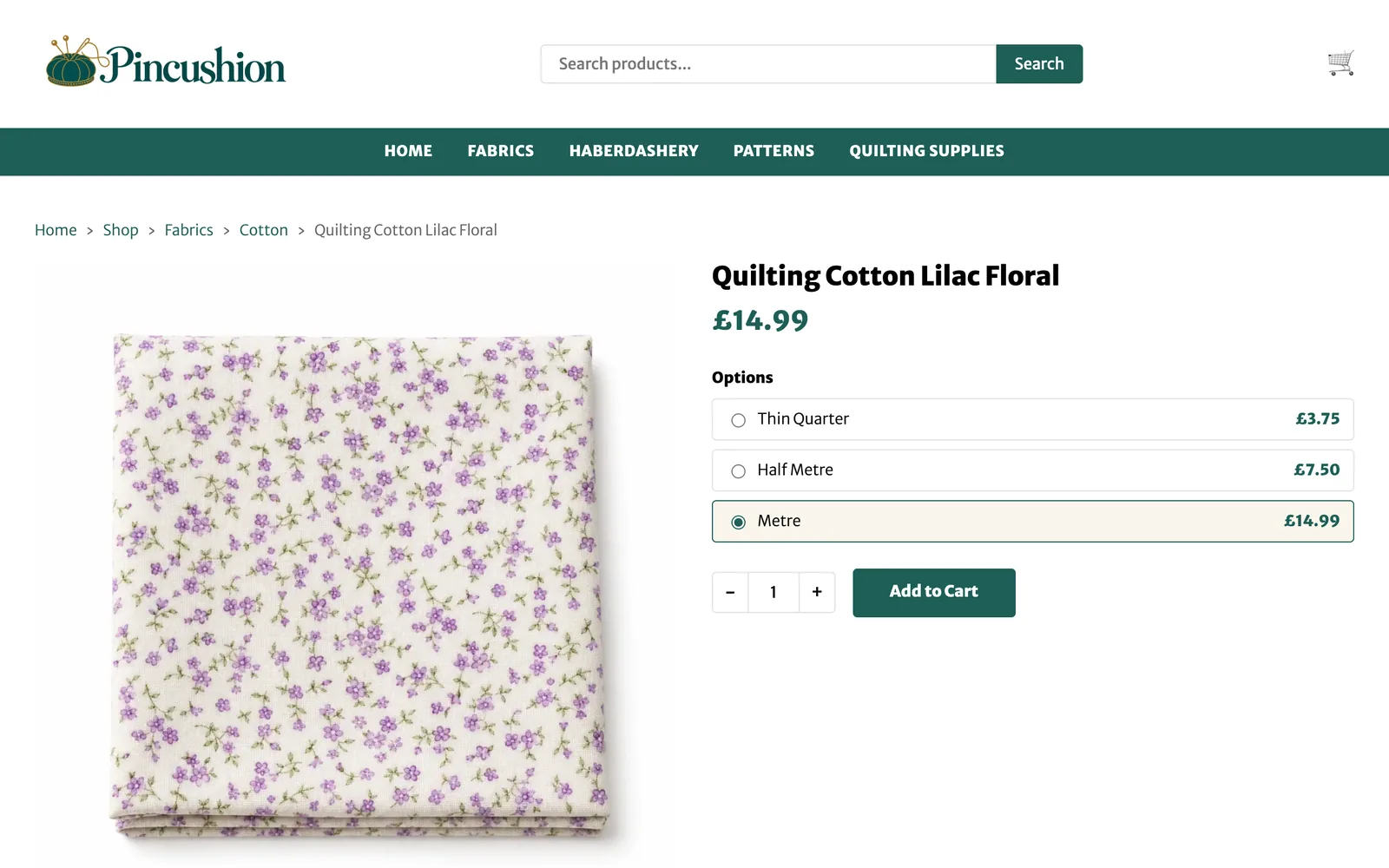
Each fabric shows its price per metre, with the cuts you offer as options on the product page: a quarter, a half metre, a metre. Customers browse by colour, fibre, width or project from the attributes you set on each product. Orders are collected in the shop or posted, and they come out of the same stock as the till.
Often, yes. We have imported a fabric shop's catalogue, customers and product photos from its previous platform as part of a Tailored setup. Send us the address of your current site and we will tell you what can come across and what would need redoing.